
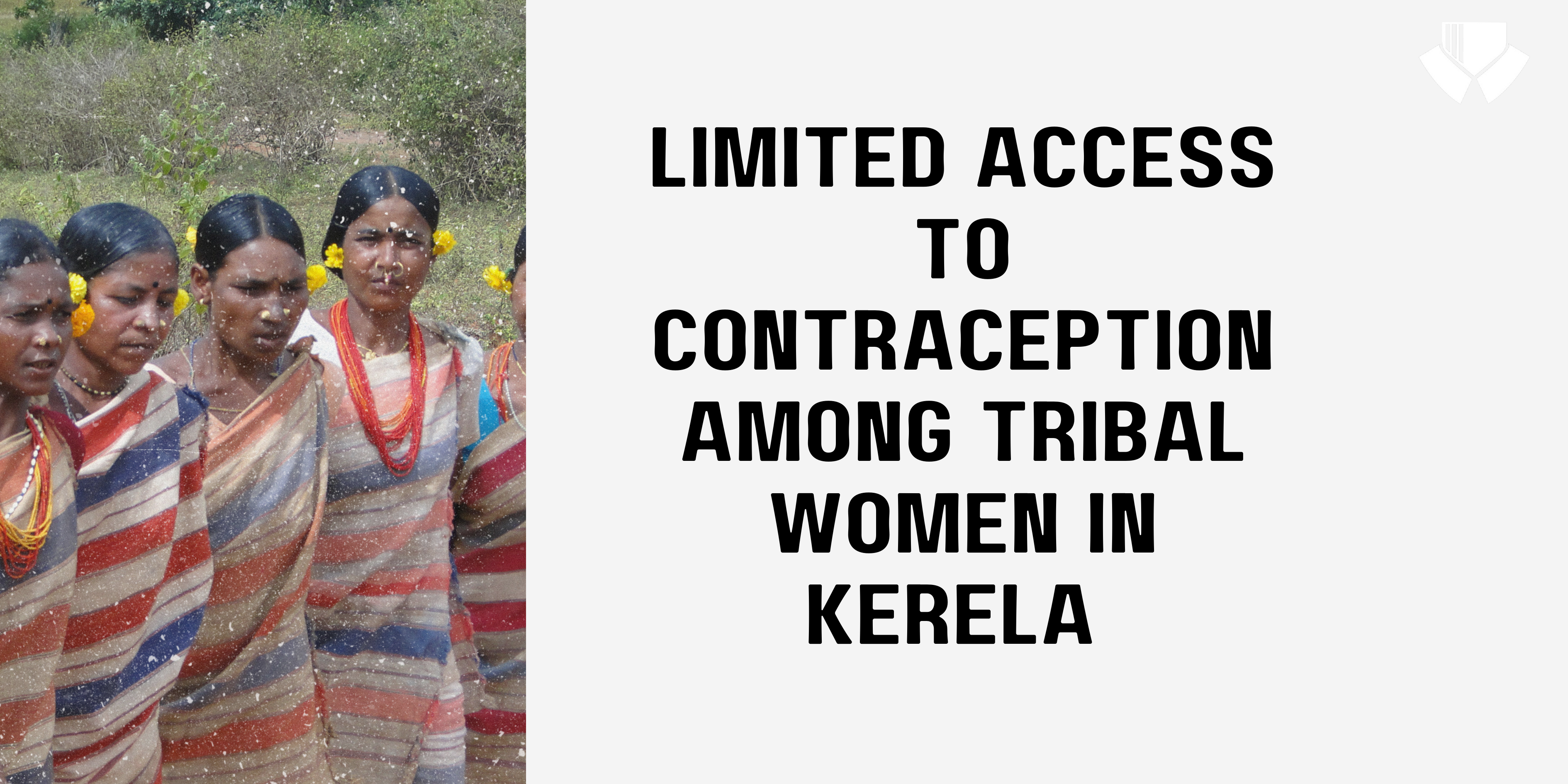
The short article is written by K GOPIKA, an LL.M student at the Department of Law, Central University of Kerala.
ABSTRACT
In the State of Kerala boasts some of the best health indicators in India, disparities in reproductive health persist among its tribal (indigenous) populations.This study analyses the extent of knowledge gaps and low contraceptive use among tribal women, how these gaps are caused by cultural and infrastructure barriers, and suggests focused interventions using data from Wayanad district. A cross-sectional study of 2,495 tribal women from Paniya, Kurichiyar, Adiya, Kattunaicken, and other tribal groups, aged 15 to 49, revealed that only roughly 26.4% of them currently use contraceptives, compared to roughly 58.5% of the rest of Kerala’s population. Key determinants include tribe group, education level, living conditions, and fertility desires; cultural practices regarding menstruation, decision-making dynamics, and infrastructural deficits further limit access; and more than half of the respondents had poor knowledge of contraceptives, with oral contraceptive pill use being particularly low (4.8%). This paper makes the case for culturally sensitive educational outreach, improved service delivery, community participation, and measures to reduce social vulnerability.
KEYWORDS:
TRIBAL WOMEN, KERALA, WAYANAD, CONTRACEPTIVE USE, KNOWLEDGE, FERTILITY INTENTIONS, HEALTH DISPARITIES, CULTURAL BARRIERS.
